
What is filtration soiling?
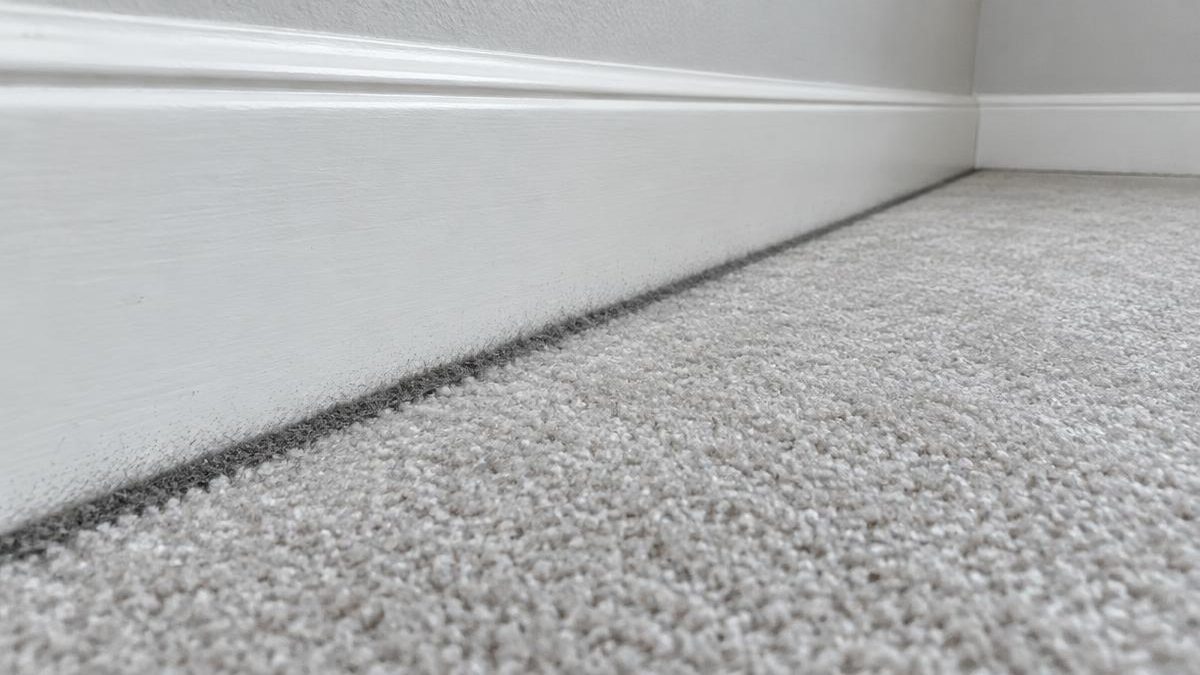
Filtration soiling is a buildup of fine airborne particles on carpet fibers where airflow is concentrated. The carpet acts as a filter: air moves through or across it, while some of the particles remain behind. Over time, those deposits can create gray or black lines rather than a single spill-shaped spot. Light-colored carpet tends to make the contrast especially noticeable.
The Carpet and Rug Institute's filtration soiling bulletin describes dust, smog, and other airborne pollutants collecting where air flows over carpet or through cracks and open spaces beneath it. CRI identifies baseboards, doorways, stair edges, and some subfloor joints as possible locations. This mechanism explains why a home can have dark perimeter lines without a matching dark traffic lane across the middle of the room.
Why do black lines appear near walls and baseboards?
Small gaps around the floor and wall junction can form an air path. Where particle-carrying air repeatedly moves through carpet at that path, deposits can become concentrated in a narrow band. Closed interior doors can also encourage airflow beneath a door while central heating or cooling operates, which may leave a line across the carpet at the doorway.
The amount of buildup depends on both airflow and the particles carried by it, according to CRI. A darker line is not automatically evidence that someone failed to vacuum. Particle sources can be indoors or outdoors, and the same room can contain several sources. Observation of the pattern is useful, but a photograph cannot establish the exact source, airflow route, or cleanability.
San Diego County homes experience varied conditions, including outdoor dust entering from dry areas and different window-opening habits near the coast. Those details may be relevant to a particular home, but they are not a diagnosis. Review the actual room, ventilation, and maintenance history rather than assume every local property has the same problem.
Are dark carpet edges always filtration soiling?
No. A narrow line that follows an airflow path is consistent with filtration soiling, but spills, furniture contact, water staining, and other contamination can produce dark areas too. Mold cannot be diagnosed or ruled out from color alone. Dampness, a known leak, musty odor, or deterioration changes the assessment and should not be treated as an ordinary cosmetic cleaning issue.
Before cleaning, tell the professional when the line appeared, whether it follows the entire room perimeter, and whether you have noticed moisture or an odor. Explain any products already applied and whether an old rug or furniture leg once covered the spot. That history can be more informative than the darkness of the mark itself.
| Observed pattern | Possible explanation | Useful next step |
|---|---|---|
| Narrow line at baseboard or doorway | Filtration soiling | Review airflow, particle sources, and cleaning options |
| Broad worn lane through a room | Traffic soil or fiber wear | Assess soil removal versus permanent appearance change |
| Localized mark with a spill history | Spot contamination | Identify the material before selecting a treatment |
| Dark area with dampness or leak history | Moisture-related problem | Investigate moisture before routine cleaning |
Why might ordinary vacuuming leave the lines behind?
Routine vacuuming removes loose dry soil, but fine deposits can lodge among fibers in a concentrated edge band. The floor head may also miss the last narrow strip beside a baseboard. Once the line is established, another quick pass over the center of the room does little to address that edge. A suitable crevice attachment helps reach loose material, but it cannot promise removal of every deposited particle or existing discoloration.
Use the attachment and settings recommended for your carpet, and avoid scraping fibers against the wall. Aggressive brushing can damage some constructions without resolving the underlying problem. Our guide to how carpet cleaning affects indoor air quality discusses particle removal in a broader context; it does not replace ventilation or source control.
How do professionals assess and clean filtration lines?
A careful assessment starts with the pattern, carpet type, condition, and contamination history. The cleaner should distinguish removable soil from wear or permanent color change and review any manufacturer restrictions. A test in an appropriate inconspicuous area can help establish a safe approach and realistic expectations before treating a long visible perimeter.
Depending on the carpet and findings, professional work may involve targeted soil removal, compatible cleaning products, controlled agitation, rinsing, and extraction. These are general possibilities, not a claim that SoCal Steam Clean provides a specialized filtration-soiling treatment or uses a particular chemical. Ask what is suitable and available for your carpet before authorizing the work.
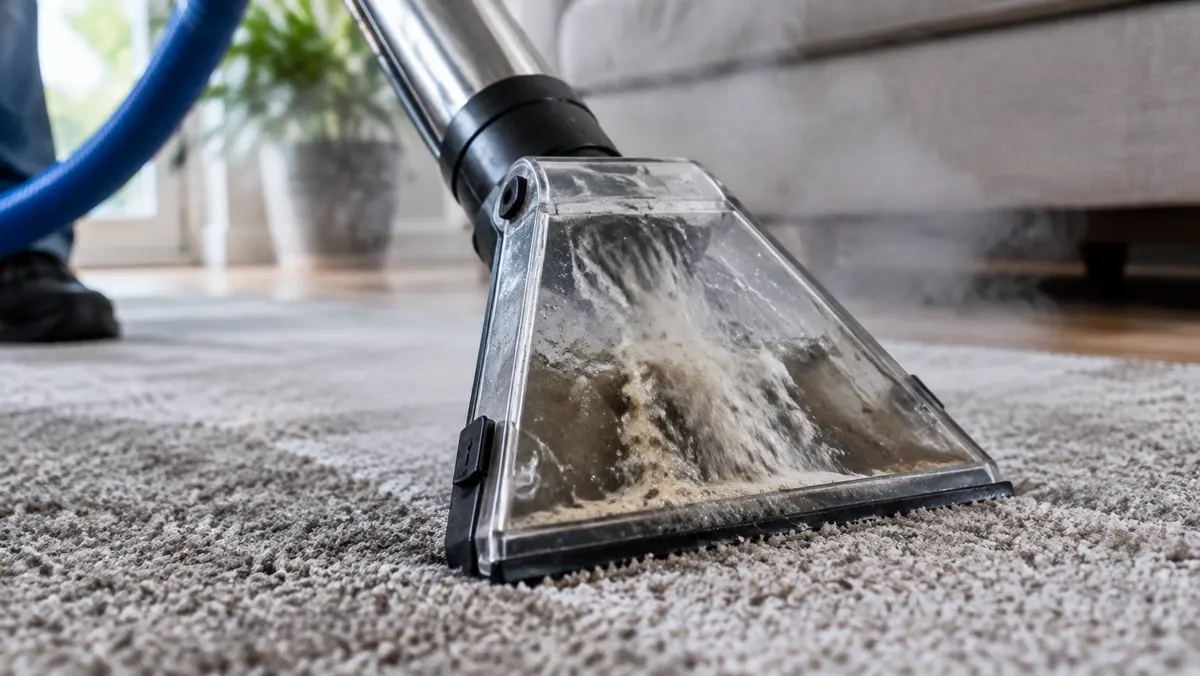
Hot-water extraction, often called steam cleaning, can remove soil through a combination of cleaning, rinsing, and suction. It is not simply a matter of making the water hotter. Established edge deposits may require a different approach from routine room cleaning, and some lines remain visible despite appropriate work. Read our hot-water extraction guide for the general process and its role.
Why can discoloration be difficult to remove completely?
Filtration soil can contain different pollutants, so two similar-looking lines may behave differently during cleaning. Severity, time in place, fiber type, construction, and any pre-existing damage affect the achievable result. A dark deposit on worn or altered fibers may leave a visible difference even after some soil has been removed. A cleaner should explain those limitations rather than promise that every edge will match the center of the room.
Avoid applying bleach, strong household chemicals, or repeated soaking in an attempt to erase the band. Those actions can introduce color loss, residue, or excess moisture. Product compatibility matters: follow the carpet manufacturer's instructions, and disclose earlier attempts to the professional. Shaw's carpet care guidance is one example of manufacturer-specific maintenance information; use the guidance for your own product, not another brand's instructions by default.
How can you reduce future edge buildup?
Prevention is not assured. Air pathways, building construction, and varied particle sources make filtration soiling difficult to eliminate completely. The goal is to reduce contributing conditions and manage buildup, not to make a permanent no-return promise. After cleaning, monitor the same edges instead of relying only on how the room looks immediately afterward.
- 1Include edges and doorways in regular vacuuming with a suitable attachment. Remove accessible loose soil before it builds into a pronounced line.
- 2Review indoor particle sources and practical ways to reduce them. Maintain heating and cooling filters according to the equipment instructions, without assuming a filter change will erase existing marks.
- 3When practical and safe, leave interior doors open while central HVAC operates. CRI identifies this as a way to reduce concentrated airflow beneath doors.
- 4Ask a qualified building or flooring professional about relevant cracks or gaps if the pattern repeatedly returns. CRI suggests reducing airflow through carpet edges and subfloor openings; do not block required ventilation or attempt unsafe building alterations.
- 5Follow a regular care schedule suited to your household and carpet manufacturer. Keep notes and photographs so recurring lines can be compared over time.
When is professional carpet cleaning worth considering?
Consider an assessment when careful routine vacuuming no longer improves the lines, the marks are spreading, or you are unsure whether the problem is soil or fiber damage. For a rental property, document the condition and involve the owner or property manager before approving treatments or alterations. If moisture is involved, resolve the moisture concern before treating the line as routine filtration soil.
Contact SoCal Steam Clean to discuss professional carpet cleaning in San Diego and whether an assessment is appropriate for your carpet. Describe the edge marks and any attempted cleaning when you request an estimate. Our San Diego service-area page provides local context. Ask about likely improvement, treatment suitability, and limitations; neither routine extraction nor any particular method guarantees complete removal.