
Why renovations leave dust in carpet
Sanding, cutting, demolition, and repeated foot traffic can carry particles beyond the room being remodeled. Carpet pile catches loose debris, while shoes, equipment, and temporary coverings can move it into hallways and bedrooms. Dust settling on shelves or other surfaces may later return to the floor, so cleaning carpet alone does not finish the whole-home cleanup.
A kitchen update in a San Diego home can therefore affect nearby carpet even when no flooring work occurred there. Ask the contractor which materials were disturbed and what containment and cleanup were performed. The project's actual materials matter more than the neighborhood or how clean the room looks.
Construction dust is not ordinary household dirt
Everyday carpet soil often includes tracked-in dirt, fibers, and household debris. Renovation residue may include fine sanding dust, fragments, paint residue, or particles from building materials. Fine particles can spread easily, and sharp fragments can snag fibers. Appearance cannot establish whether a dust deposit is safe to handle.
| Situation | Appropriate next step |
|---|---|
| Known non-hazardous loose debris | Finish contractor cleanup, then use carpet-compatible routine care. |
| Fine ordinary residue after safe cleanup | Consider suitable sealed filtration and professional carpet assessment. |
| Unknown dust or suspected hazardous material | Stop disturbance and contact qualified professionals before carpet cleaning. |
When specialist assessment comes first
In pre-1978 housing, work disturbing lead-based paint can create dangerous lead dust. EPA's lead-safe renovation guidance explains the risk and the role of lead-safe certified contractors. An older home does not automatically mean contaminated carpet, but uncertainty is a reason to investigate before cleaning—not to try an ordinary vacuum first.
Suspected asbestos requires a different safety response too. EPA says it generally cannot be identified by sight and recommends trained, accredited professionals for relevant inspection and sampling. Follow EPA's asbestos guidance: leave suspect materials alone. Do not collect samples, shake coverings, sweep, vacuum, or wet-extract potentially contaminated carpet yourself.
Dust from concrete or masonry work may present additional hazards, including silica exposure. Chemical spills, significant water damage, and unknown residues also need an appropriate assessment. Keep people and pets away from suspect areas and contact the contractor or a qualified specialist. Routine carpet cleaning does not certify that a contaminated room is safe.
Important: SoCal Steam Clean's routine carpet-cleaning service is not being presented as lead or asbestos assessment, abatement, or hazardous-dust remediation.
Safe initial cleanup for known non-hazardous residue
Proceed with household carpet care only after the source is known to be non-hazardous and the contractor has completed required cleanup. Avoid carrying residue through the home. Keep shoes and equipment from tracking between work areas and clean rooms, and arrange removal of remaining renovation waste before the carpet appointment.
For accessible, confirmed ordinary debris, carefully pick up larger pieces without rubbing them into the pile. Do not reach into sharp fragments or pull embedded objects through fibers. Avoid dry sweeping, compressed air, or shaking dusty coverings indoors. If debris is extensive, embedded, or unsafe to handle, ask a professional to assess it instead.
When HEPA vacuuming may be appropriate
For known non-hazardous fine dust, a suitable vacuum with a sealed HEPA filtration system may help retain particles rather than return them to room air. Equipment suitability depends on the dust, carpet construction, and manufacturer instructions. Use an appropriate attachment and setting; aggressive brush action can damage some carpet types.
A filter label alone is not enough. EPA's HEPA-vacuum guidance explains that the machine must be designed so air does not bypass the filter. Adding a HEPA filter to a shop vacuum does not necessarily create a suitable sealed system. This equipment discussion is not permission to clean suspected hazardous dust yourself.
Ask the provider what pre-cleaning is appropriate and available for your carpet. This guide does not claim SoCal Steam Clean supplies HEPA vacuuming. Follow equipment maintenance instructions and avoid any handling that releases collected dust back into the room.
When professional hot-water extraction may help
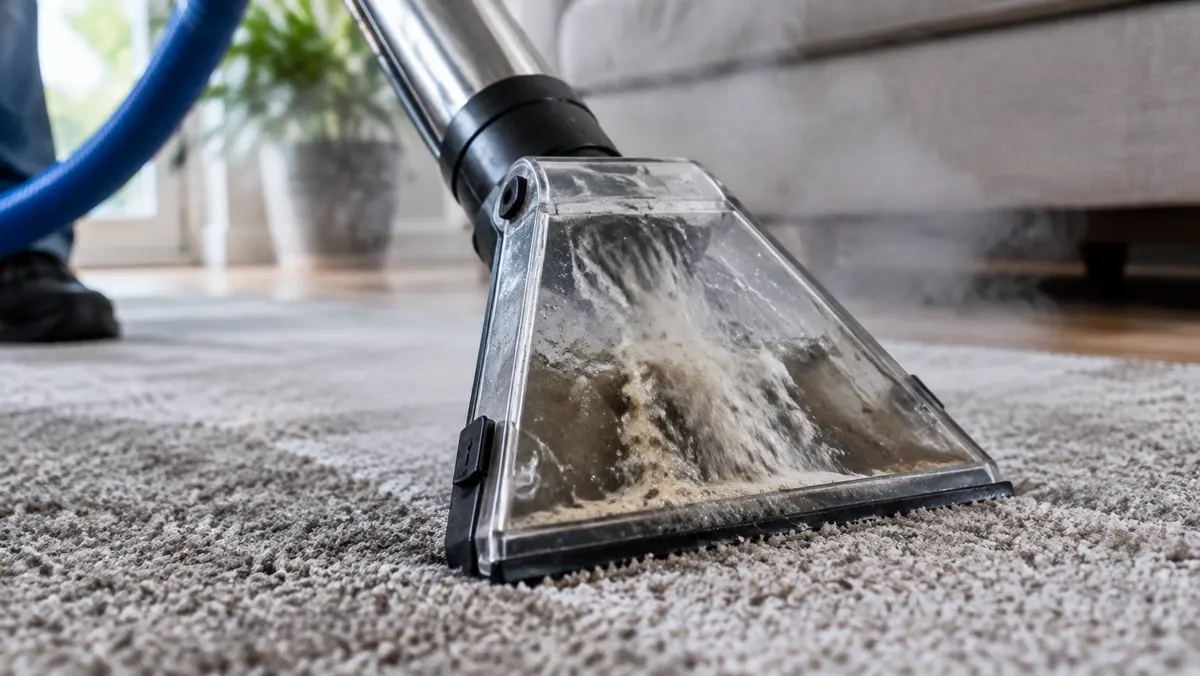
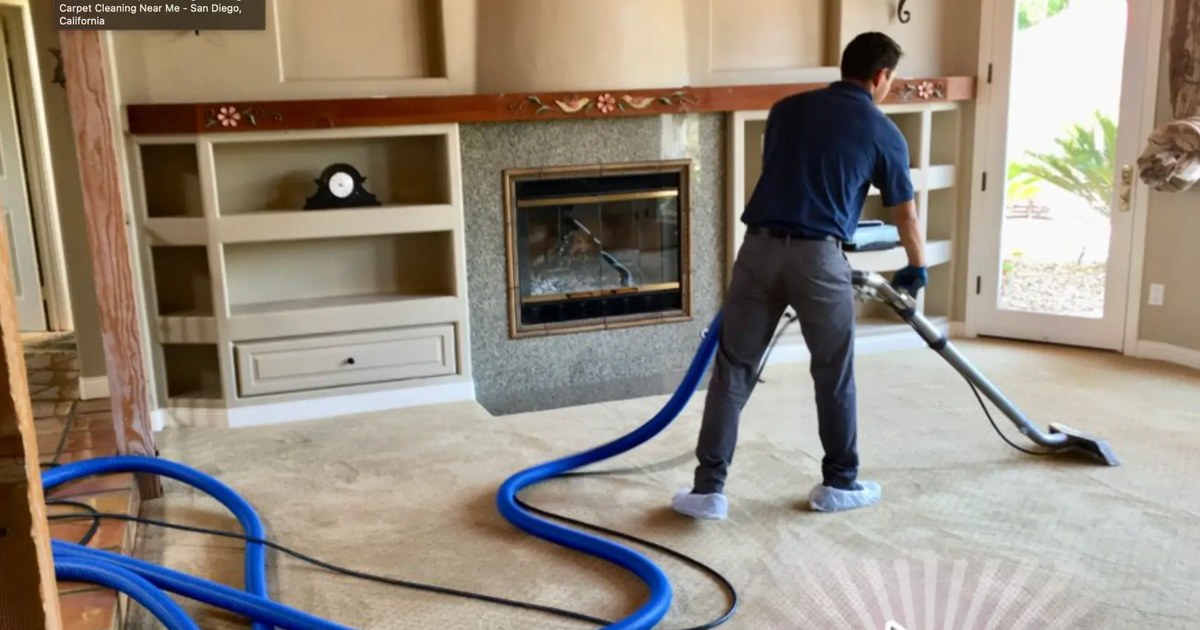
Once safe dry-soil removal is complete, professional hot-water extraction may help remove remaining ordinary soil and residues from compatible carpet. It combines a suitable cleaning approach, rinsing, and suction. It is not a substitute for removing sharp debris, controlling the dust source, or addressing hazardous contamination.
Our hot-water extraction guide explains the process. A cleaner should review fiber type, condition, prior products, and manufacturer restrictions before recommending treatment. Paint, adhesive, embedded fragments, and permanent fiber damage may not respond to routine cleaning; complete removal of every renovation mark is not guaranteed.
Finish dusty work before cleaning carpet
Schedule final carpet care after sanding, cutting, demolition, waste removal, and required work-area cleanup. A premature appointment can leave newly cleaned carpet exposed to another round of dust. Coordinate the sequence with your contractor, including any remaining touch-ups or equipment collection.
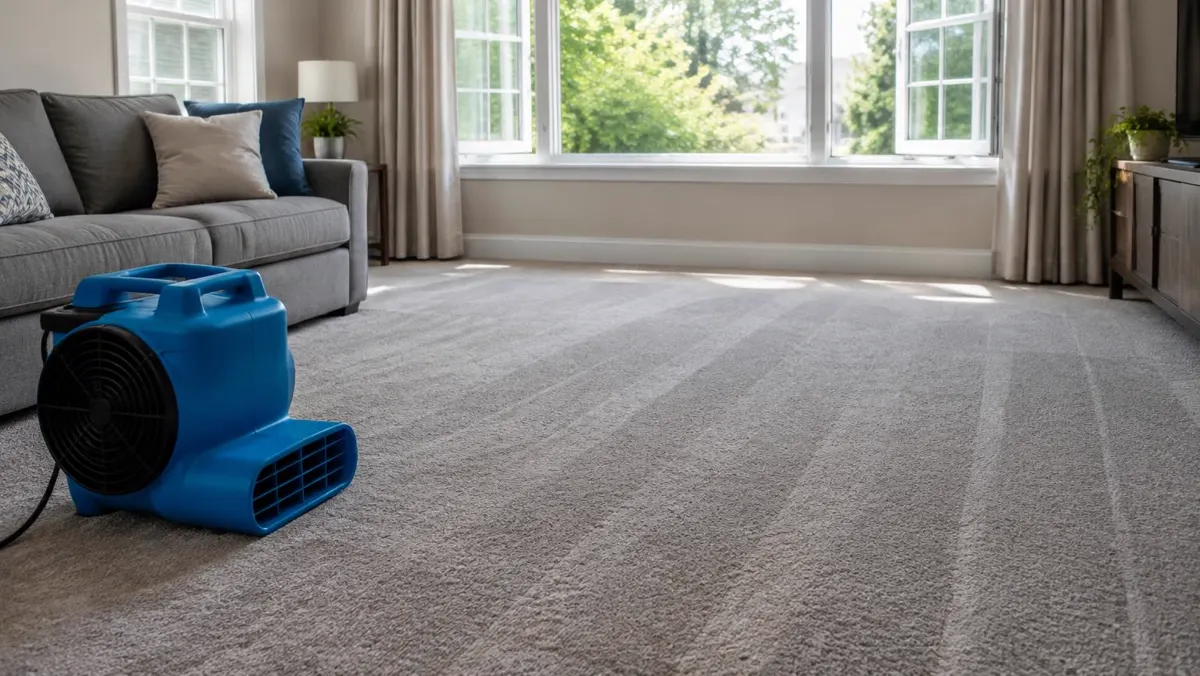
Plan drying around the home's conditions. Coastal moisture and inland warmth can affect whether open windows help; use the cleaner's instructions rather than a fixed promise. Our carpet drying guide covers the relevant factors. Avoid replacing coverings or furniture on damp carpet without suitable guidance.
Protect fibers and prevent recontamination
Keep walkways clear, avoid dragging renovation equipment across carpet, and use floor protection suitable for the carpet and task. Do not apply tape or adhesive directly to fibers unless specifically approved. Avoid improvised bleach treatments, repeated soaking, or scraping dried material from the pile.
Follow product-specific care instructions and discuss vacuum settings with the cleaner. The Carpet and Rug Institute's maintenance guidance supports regular vacuuming and periodic professional care. After cleaning, address remaining ordinary dust on other surfaces through appropriate housekeeping so it does not settle back into the carpet.
Post-renovation homeowner checklist
For House Carpet Cleaning San Diego homeowners can discuss after a renovation, contact SoCal Steam Clean about residential carpet cleaning. Explain the project before you request an estimate. Assessment comes first when dust safety or carpet condition is uncertain.
- 1Confirm the materials disturbed and resolve any suspected hazardous contamination with qualified professionals.
- 2Finish dusty work, required contractor cleanup, and waste removal before booking final carpet care.
- 3Limit tracking and arrange safe removal of confirmed non-hazardous loose debris.
- 4Share carpet details, residue history, and previous cleaning attempts with the provider.
- 5Confirm a compatible cleaning method and plan airflow, drying, and furniture return.