
What causes traffic lanes
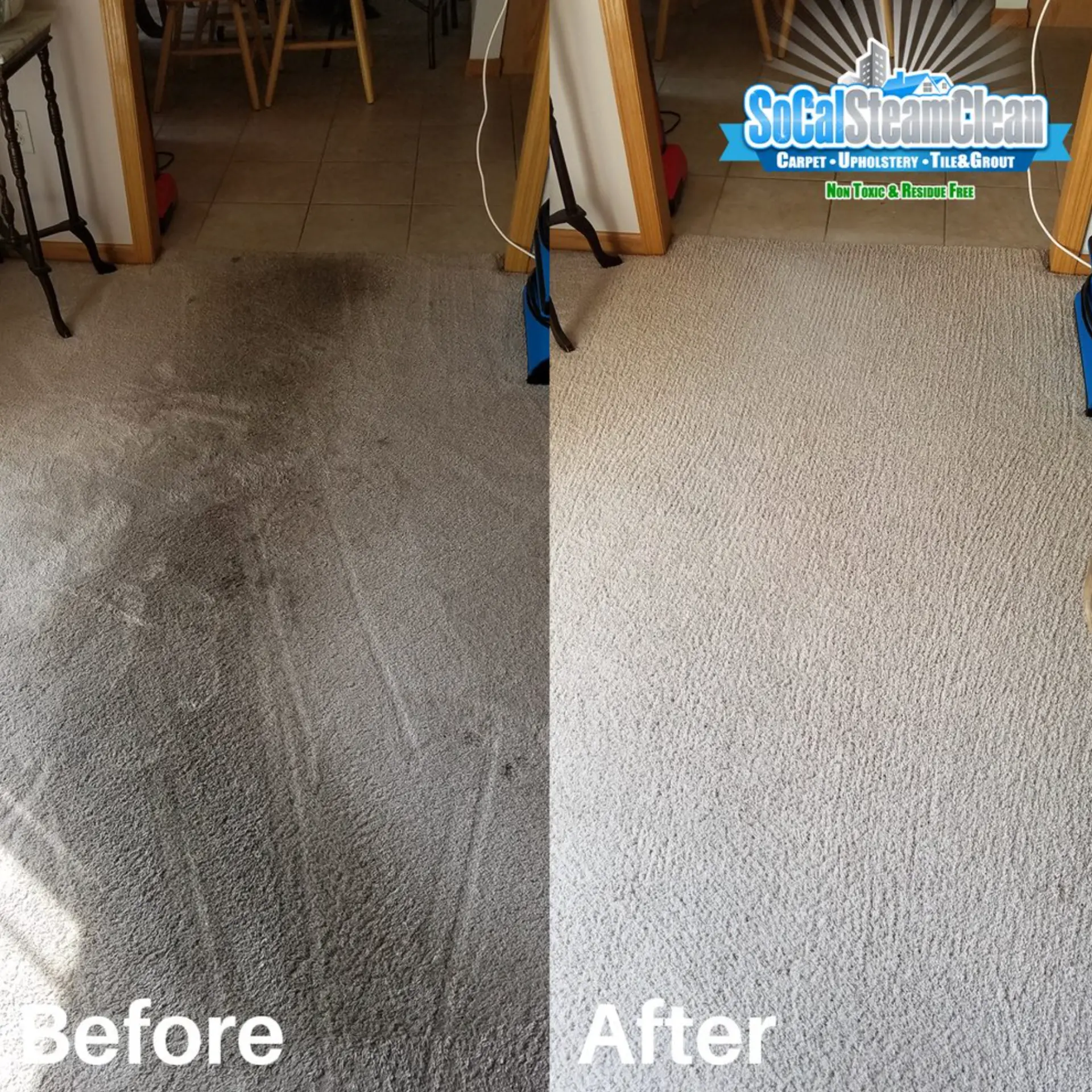
Shoes and feet bring in grit and oils. Grit scratches fibers; oils hold soil. Over time, a gray path forms where people walk most. Some of that is removable soil; some may be permanent wear.
How steam cleaning handles it
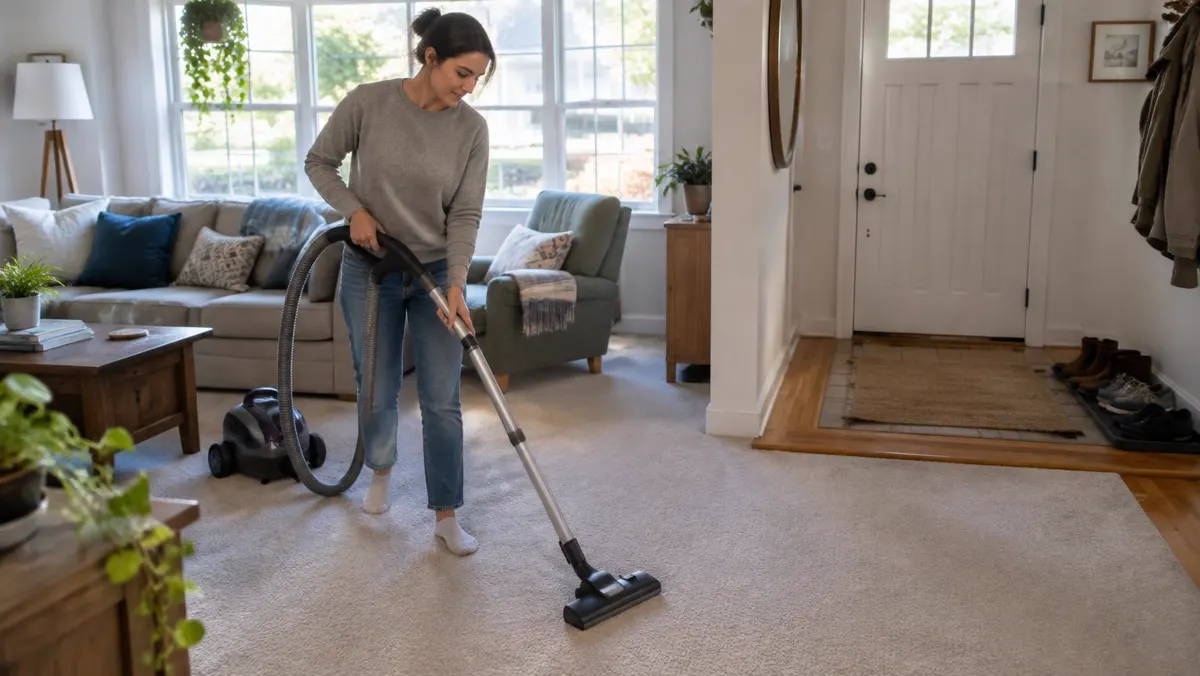
- 1Thorough vacuuming or dry soil removal where needed.
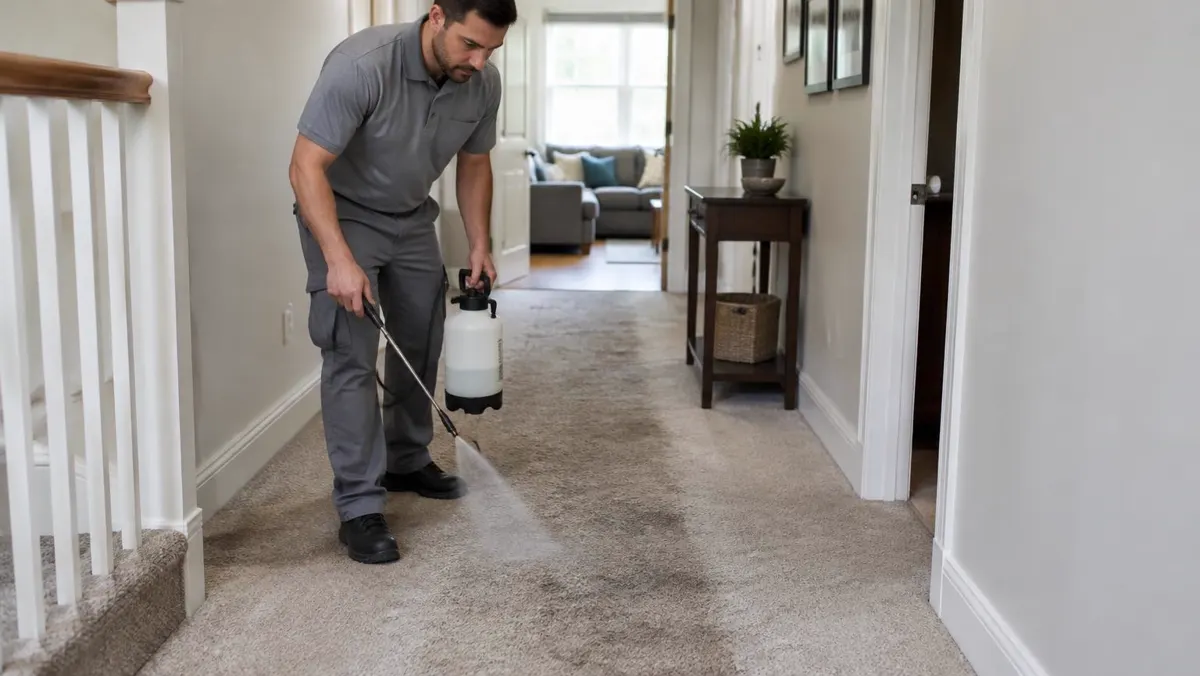
- 2Traffic-lane pre-treatment to break down oily soil.
- 3Agitation to loosen soil from fibers.
- 4Truck-mounted hot-water extraction with strong suction.
- 5Grooming and drying.
Soil vs wear
| Look | Cause | Cleaning result |
|---|---|---|
| Gray, dull path | Soil and oily residue | Usually improves significantly |
| Fuzzy, frayed tips | Fiber wear | Doesn't recover |
| Flattened pile | Crushing | May partly lift; won't fully restore |
| Lighter path | Abrasion or fading | Not reversible |
Frequency for high-traffic zones
Many homes clean traffic areas every 6–12 months even if bedrooms go longer. See how often to clean your carpets.
Protect traffic areas between cleanings
CRI emphasizes soil prevention and regular vacuuming (CRI). Book carpet cleaning or read about truck-mounted cleaning.
- Entry mats inside and out.
- Vacuum hallways and stairs several times a week.
- Runners in heavy-use hallways.
- Shoes off at the door.