
Why a sectional needs a different appointment plan
An L-shaped or U-shaped sofa has more than a row of seats. The inside corner collects crumbs, the chaise receives concentrated lounging contact, and shared armrests can accumulate body oils. A wall-facing back may be difficult to reach even when the seat cushions are accessible. Counting seats alone does not describe the full cleaning scope.
San Diego living rooms range from compact condos to larger family spaces. A sectional may fit the room closely enough that equipment access or a safe walking route is limited. Provide an overall photograph, the number of modules, and the surfaces you want assessed. The purpose is to plan the actual layout, not to assume every large couch needs the same treatment.
Find care instructions for every material on the sofa
Look for the manufacturer’s instructions and tags without tipping a heavy module. Some sectionals combine textile seating, different trim, synthetic panels, or leather components. A single upholstery code may not apply to every surface. Give the technician the model information and clear label photos, especially when the set was bought in separate pieces.
Ashley’s manufacturer code guide explains common restrictions. Codes describe cleaning limits, not a guaranteed whole-sofa method. Fabric condition, dyes, backing, cushion filling, and construction also matter. The product-specific instructions take priority, including any instruction not to remove or wash covers.
| Code | General meaning | Important restriction |
|---|---|---|
| W | Compatible water-based upholstery spot care | Not permission to saturate or machine-wash |
| S | Compatible dry-cleaning solvent only | Do not recommend water or steam |
| WS or SW | Specified water or solvent spot care | Follow the product’s narrower instructions |
| X | Vacuuming or light brushing only | No water-based or solvent cleaner |
Separate removable cushions from washable covers
A cushion that lifts off its seat is not necessarily machine washable. A zip may allow assembly or servicing rather than home laundering. Removing a cover can create shrinkage, fitting, or texture problems when washing is not authorized. Read the instructions before unzipping, washing, or drying any component.
Make a simple cushion map using photographs: left seat, corner seat, chaise, and matching back cushion. Keep labels or notes off the fabric rather than sticking adhesive directly onto it. Tell the cleaner which cushions are fixed, reversible, or decorative. This reduces confusion during handling and helps agree whether both cushion faces and fixed surrounding upholstery are in scope.
How should L-shaped and U-shaped modules be prepared?
Clear the open side and the route from the entrance, then discuss whether wall-facing surfaces can be reached. Do not disconnect or drag a large sectional simply to expose its back. Connectors, feet, flooring, and heavy components can be damaged by improvised movement. If access requires lifting or specialist furniture handling, arrange that separately.
For reclining or powered modules, follow the manufacturer’s instructions and disclose electrical features before cleaning. Remove reachable charging leads and small electronics safely, but do not dismantle motors or wiring. A sofa that cannot be moved may still have accessible surfaces worth assessing. The quote should describe those limitations instead of suggesting the entire set was cleaned.
Keep routine maintenance gentle and layout-specific
Use manufacturer-approved vacuum settings and a suitable upholstery attachment on accessible seats, crevices, and armrests. Remove coins, toys, and other larger objects first. Work around seams without forcing the tool into connector gaps, and avoid pulling loose threads. Check the chaise and inside corner because shared snacks and lounging can concentrate debris there.
For ordinary fresh spills, blot gently with a plain white cloth if the product instructions allow it. Do not rub, flood the area, or reach for a carpet-cleaning solution by default. The existing general upholstery care guide gives broader context. This sectional plan concentrates on access, cushions, and high-contact modules rather than replacing that guide.
Routine care and professional treatment are not interchangeable
Vacuuming removes loose debris but cannot establish what caused a dark armrest or deeply set spill. Food oils, colored drinks, transferred dye, and pet accidents may require different decisions. Describe what happened and the products already used. A cleaner should separate soil from wear, damaged fabric, and permanent discoloration.
| Concern | Routine homeowner care | Discuss with the professional |
|---|---|---|
| Loose crumbs and pet hair | Approved dry attachment | Hard-to-reach fixed surfaces |
| Fresh ordinary spill | Permitted gentle blotting | Source and earlier products |
| Dark shared armrest | Compatible vacuuming | Body oils versus fabric wear |
| Set odor or color transfer | Avoid repeated wet attempts | Compatibility and realistic limits |
What should households with children and pets plan?
Remove snacks, small toys, blankets, and pet bedding from the work area. Keep children and animals away from equipment, cleaning products, and any surfaces being treated. Do not rely on a broad safety label as permission to sit or sleep on damp upholstery. Ask for product-specific precautions and the technician’s return-to-use instructions.
Pet hair, urine, and ordinary household odors are different concerns. Disclose affected cushions, including any liquid that may have reached filling or fixed upholstery. Cleaning the visible cover does not guarantee removal from hidden materials. Avoid promising odor elimination or using scent to conceal an unresolved problem. A protected alternate seating area makes the appointment easier for the whole household.
A sectional preparation checklist for your quote
Send information before selecting a time, particularly for a large set or tight room. The existing furniture-moving guide explains why access and movement should be agreed rather than assumed. Do not add unconfirmed moving work to your expectations.
- 1Photograph the entire layout and list modules, chaise, and recliners.
- 2Photograph care labels and identify mixed materials.
- 3Mark concerns in a photo, not with tape on the fabric.
- 4List removable cushions, fixed backs, and desired surfaces.
- 5Explain parking, entry, power features, and movement restrictions.
- 6Provide another seating option while assessed surfaces dry.
Professional cleaning starts with suitability, not more heat
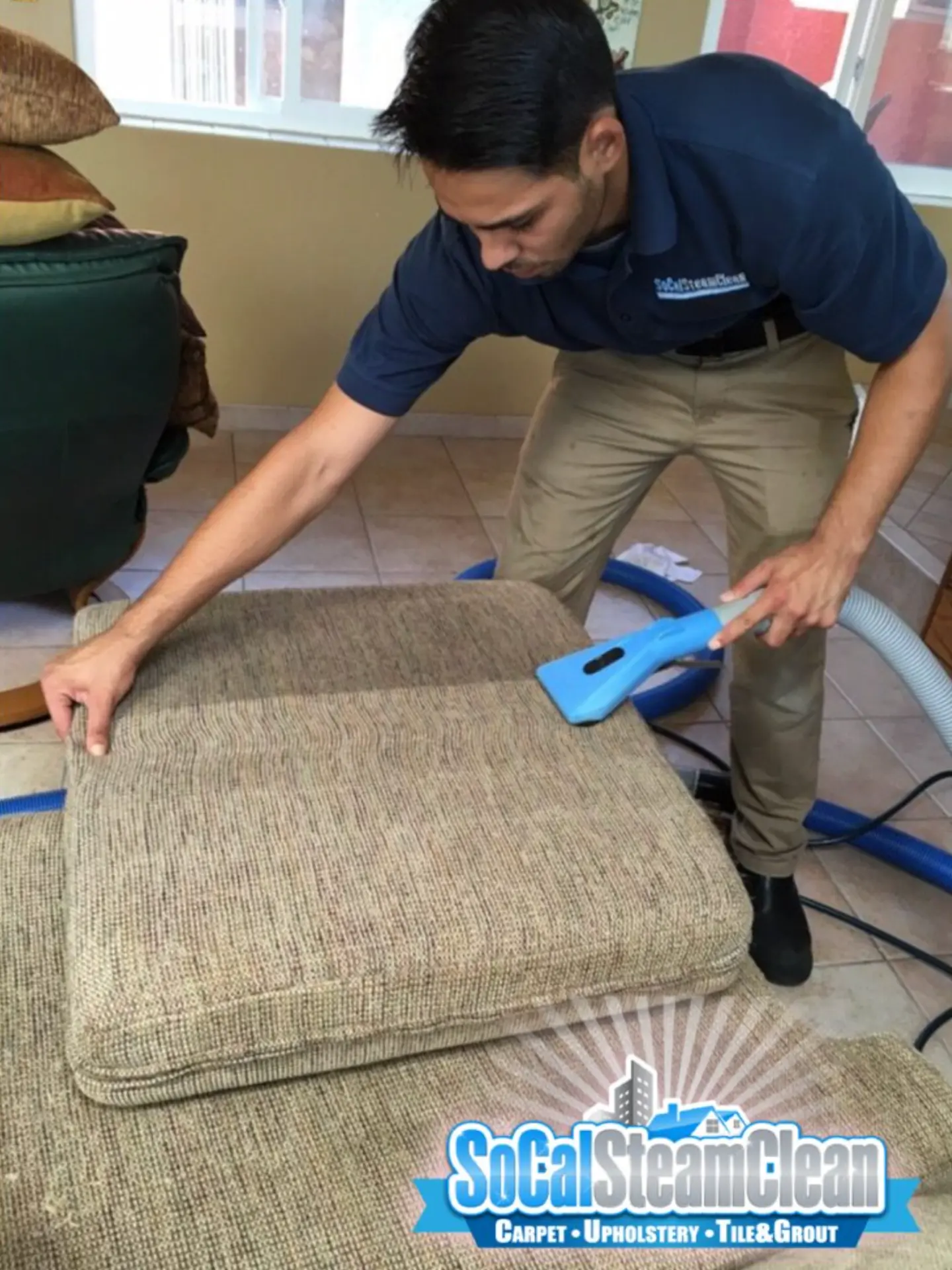
SoCal Steam Clean offers material-aware upholstery cleaning in San Diego. Request confirmation that the particular sectional fabric and construction can be serviced. Do not assume solvent-only or specialist work is available simply because it is described in a manufacturer’s code table.
For compatible materials, the technician can discuss the method, scope, and expected appearance changes. More heat or stronger chemicals are not a substitute for identification. Permanent staining, frayed seams, faded fabric, and worn filling may remain. A practical assessment distinguishes what can be cleaned from repair or replacement needs without promising that an older couch will become new.
Allow drying and ventilation without improvising heat
Follow the cleaner’s instructions for ventilation and cushion positioning. Keep passages clear and avoid leaning wet cushions against unsuitable surfaces. Do not use a hair dryer, space heater, or concentrated sun as a shortcut. Coastal humidity, room airflow, fabric, filling, and treatment amount can affect drying, so a fixed clock time is not a guarantee.
Wait for the agreed return-to-use conditions before restoring blankets or letting the family settle back in. If a cushion remains unusually damp or develops a concern, contact the cleaner rather than treating it again yourself. Request a sectional upholstery quote with the layout and fabric photos. This November 22 editorial-campaign guide was first published November 23, 2026.