
The goal of a professional service
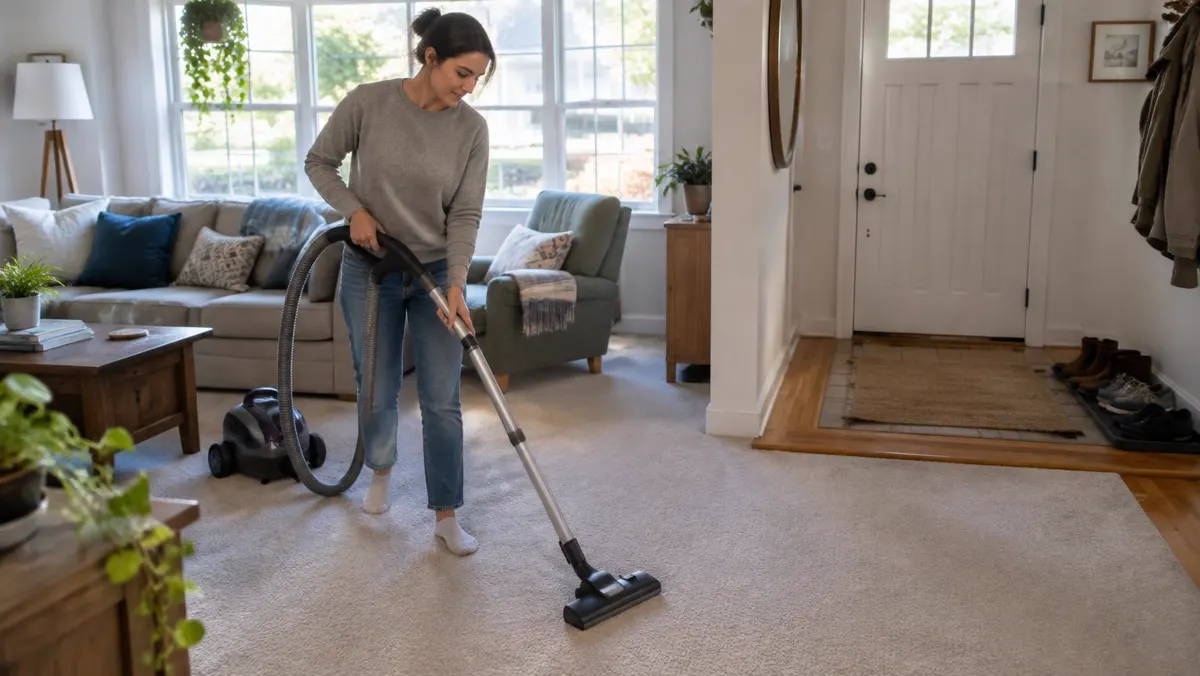
Vacuuming removes loose, dry soil. What it can't remove are the oily films, sticky residues and fine particles that bind to carpet fibers over time. Those are what make traffic lanes turn gray and carpet look dull even in a tidy home.
A professional service is designed to remove that embedded layer. The Carpet and Rug Institute recommends that homeowners professionally deep clean carpet every 12 to 18 months to remove embedded dirt and grime, alongside regular vacuuming and prompt spot cleaning. Homes with pets, kids or heavy traffic often benefit from a shorter interval.
Step 1: Booking and quoting
Good quotes start with good information. When you call or send a request, expect questions about the number of rooms, approximate sizes, stairs, pets, visible stains and furniture. Photos help a lot — our quote builder lets you upload pictures of each area.
Many companies, including SoCal Steam Clean, confirm the final price on-site after a walk-through. That protects you from surprises caused by a phone estimate that didn't account for heavy soil or pet contamination.
Step 2: Inspection and walk-through
The technician should look at the carpet before touching it. During the walk-through they identify the fiber type where possible, note traffic lanes and spots, ask what caused particular stains and point out anything that may not fully come out, such as fading, bleach spots or worn fibers.
Tip: Point out every spot you care about during the walk-through, including ones hidden under furniture. It's much easier to treat them when the technician knows where they are.
Step 3: Pre-treatment
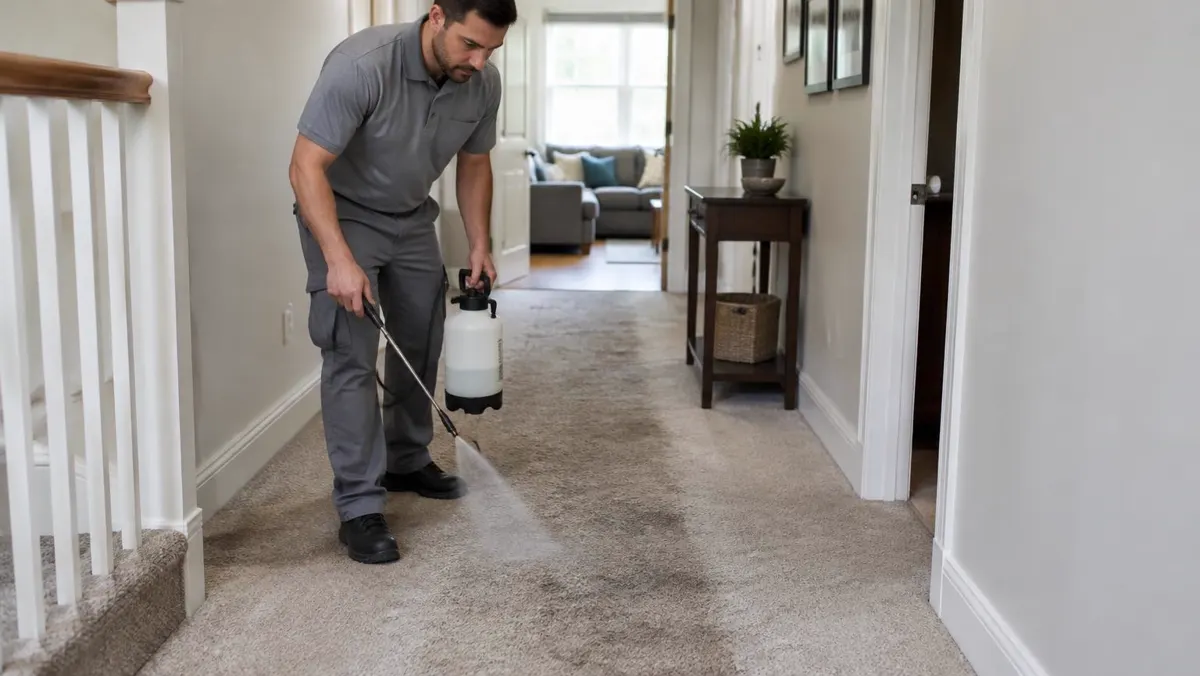
Pre-treatment is a solution applied before extraction to break down oily soil and loosen spots. Traffic lanes, entryways and areas around furniture often need it most. The product and dwell time depend on the fiber and the kind of soil.
Pre-treatment is one of the main differences between professional work and renting a machine. Without it, hot water alone often removes the surface dirt but leaves the gray haze in traffic lanes.
Step 4: Hot-water extraction
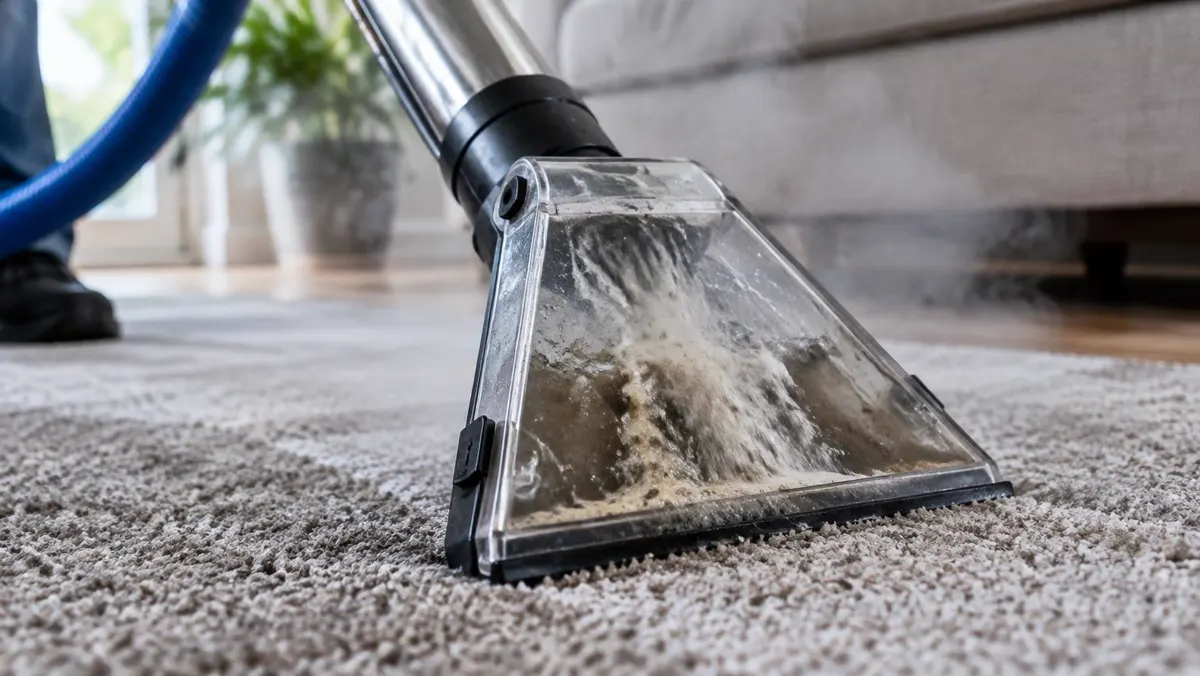
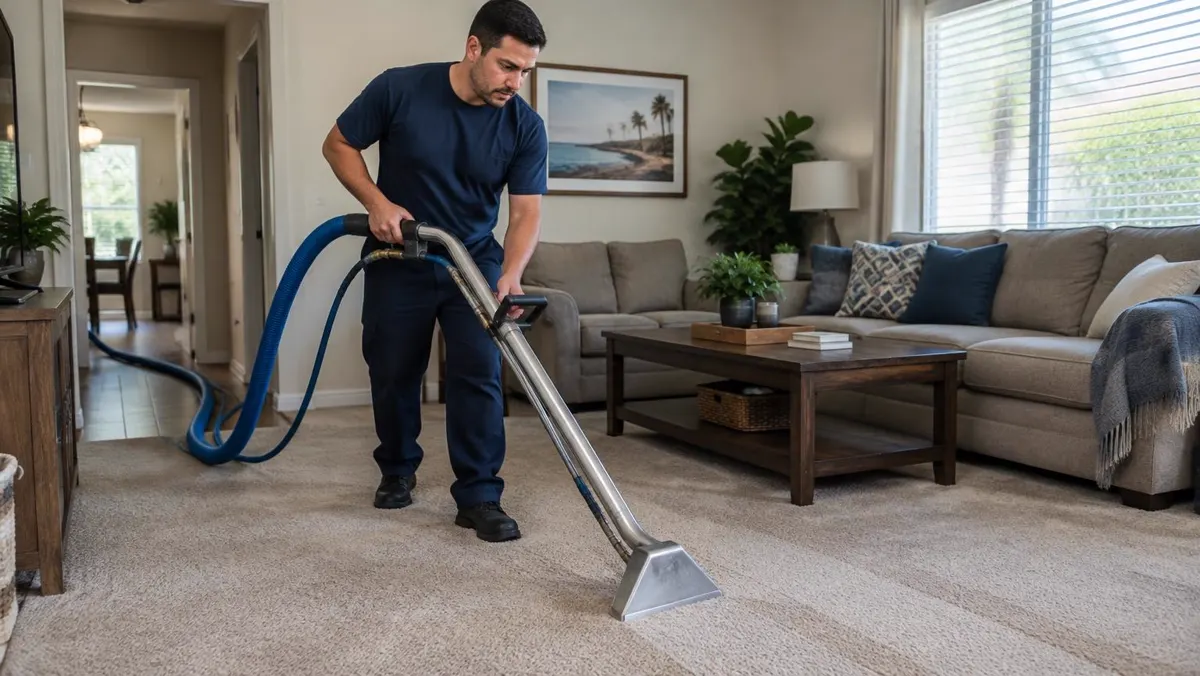
Hot-water extraction injects heated water into the carpet and pulls it back out immediately with strong suction. SoCal Steam Clean uses industry-standard truckmount equipment, which is powered from the van and delivers consistent heat and suction. The aim is to rinse soil and residue out of the carpet, not leave soap behind.
Residue matters because sticky detergent attracts new dirt. That's why we use CRI Certified residue-free products where appropriate. Read more about our carpet cleaning in San Diego.
Step 5: Spot work and final walkthrough
After extraction, remaining spots may get targeted treatment. The technician then reviews the results with you, explains which areas improved and which may need more time or a different treatment, and shares drying guidance.
What's included versus quoted separately
At SoCal Steam Clean, our pet treatment targets urine, odor, stains, bacteria, pet hair and dander, and is quoted by room based on severity. Upholstery cleaning and tile work can be bundled into the same visit.
| Service | Usually included | Often quoted separately |
|---|---|---|
| Inspection and walk-through | Yes | — |
| Pre-treatment of traffic lanes | Yes | — |
| Hot-water extraction | Yes | — |
| Everyday spot treatment | Yes | — |
| Pet urine and odor treatment | — | Yes, based on severity |
| Upholstery, sofas and sectionals | — | Yes |
| Tile, grout and natural stone | — | Yes |
How to prepare for your appointment
Our appointment checklist has a printable version of these steps.
- Pick up small items, toys, cords and anything on the floor.
- Move breakables and items off low furniture.
- Let us know about large furniture when you book so we can plan.
- Keep pets in a separate room during the visit.
- Make sure we have parking close to the entry for the hoses.
- Plan for the carpet to stay damp for several hours.
After the service: drying and care
Drying time depends on carpet type, humidity and airflow. Opening windows when the weather allows, running fans or air conditioning, and keeping heavy traffic off damp carpet all help. Place foil or blocks under furniture legs that go back on damp carpet to prevent transfer.
Between visits, regular vacuuming and quick blotting of spills keep the carpet cleaner for longer.