
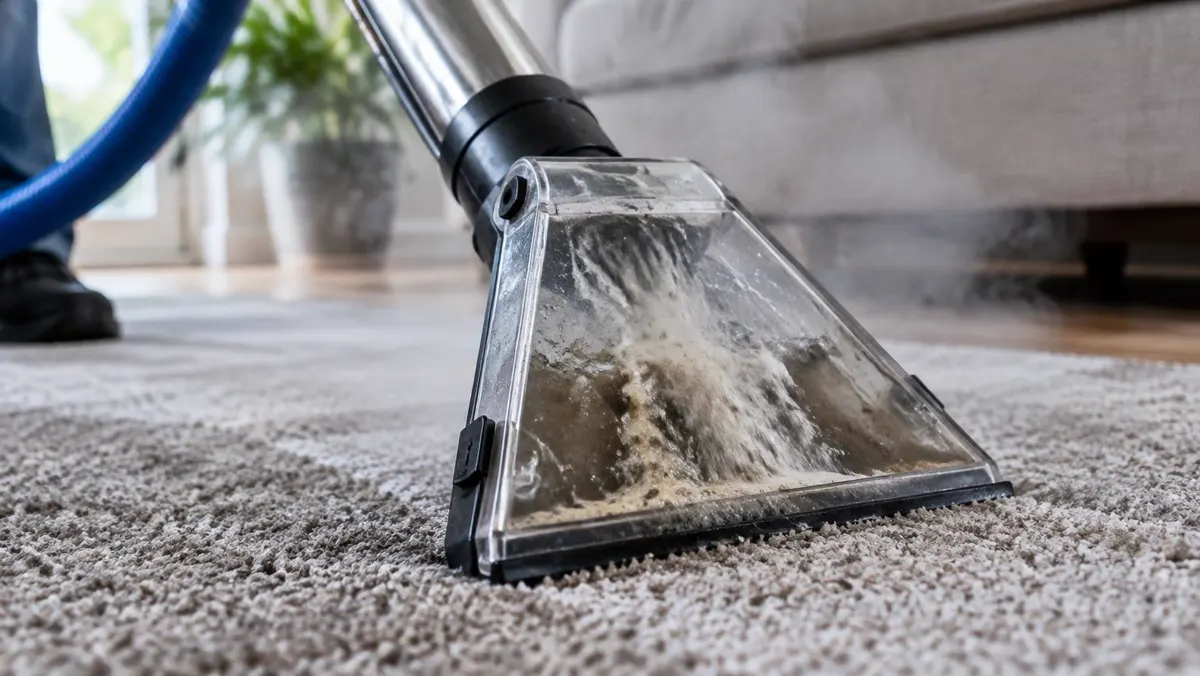
How hot-water extraction works
Heat helps loosen oily soil, and strong suction is what removes the water and dirt. A machine that sprays well but extracts weakly leaves carpet wetter and can leave residue behind.
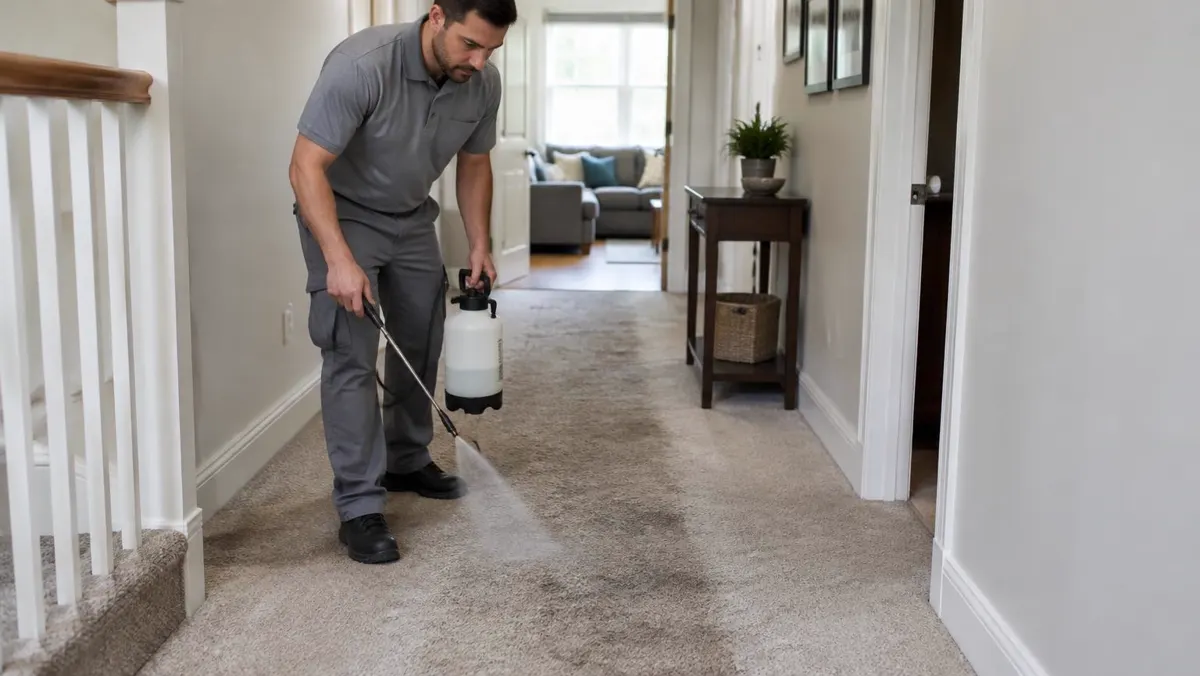
- 1Pre-treatment: a solution loosens oily soil and spots so they release more easily.
- 2Injection: hot water, sometimes with a rinse agent, is sprayed into the carpet pile.
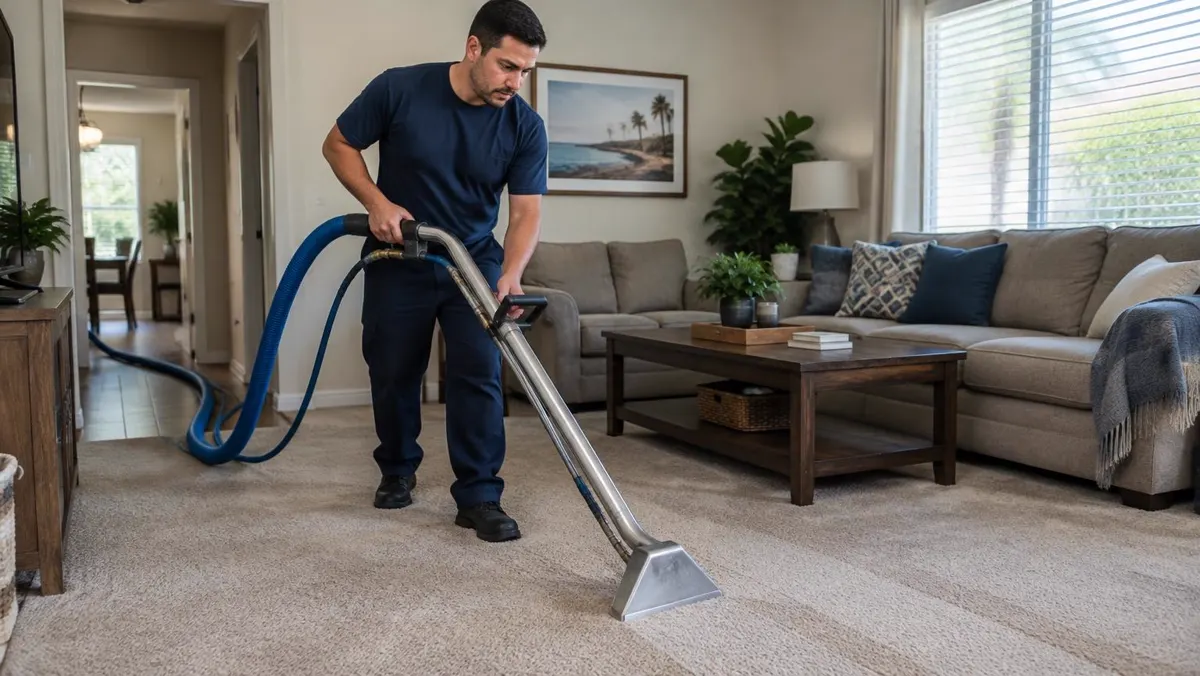
- 3Extraction: a vacuum pulls the water back out almost immediately, along with suspended soil.
- 4Grooming and drying: fibers are set, and airflow helps remaining moisture evaporate.
Truckmount, portable and rental machines
SoCal Steam Clean uses industry-standard truckmount hot-water extraction for most residential jobs. For a deeper look at do-it-yourself machines, see professional vs. DIY carpet cleaning.
| Equipment | Power source | Typical strengths | Limitations |
|---|---|---|---|
| Truckmount | Engine or generator in the service vehicle | Consistent heat and strong suction; waste water goes to the truck | Needs hose access from the van; less practical in some high-rise settings |
| Portable professional | Wall outlets | Reaches upper floors and tight access | Generally less heat and suction than a truckmount |
| Rental / DIY | Wall outlet | Low cost for small jobs | Weaker suction, easy to overwet or leave soap |
Why residue matters
If cleaning solution stays in the carpet, it can feel sticky and attract new soil, making carpet look dirty again sooner. Thorough rinsing and extraction help prevent that. The Carpet and Rug Institute's Seal of Approval program tests cleaning products, extractors and systems for how effectively they clean carpet.
We use CRI Certified residue-free products where appropriate, matched to the fiber.
Is steam cleaning right for every carpet?
Hot-water extraction is the method many carpet manufacturers recommend for synthetic wall-to-wall carpet, and it works well on most nylon, polyester and olefin carpets found in homes. Some materials need extra care, such as wool or certain natural fibers that are sensitive to heat and pH. We don't clean oriental, imported or delicate rugs; we focus on manufactured carpet and synthetic area rugs.
Important: Check your carpet warranty. Some manufacturers specify the cleaning method and frequency needed to keep the warranty valid.
What affects the result
- How long soil and stains have been in the carpet.
- Fiber type and carpet construction.
- Previous DIY cleaning that left residue behind.
- Whether contamination, such as pet urine, reaches the padding.
- Pre-treatment choice and dwell time.
- Heat and suction of the equipment.
What affects drying time
| Factor | Effect | What helps |
|---|---|---|
| Humidity | Humid air slows evaporation | Air conditioning or dehumidifier |
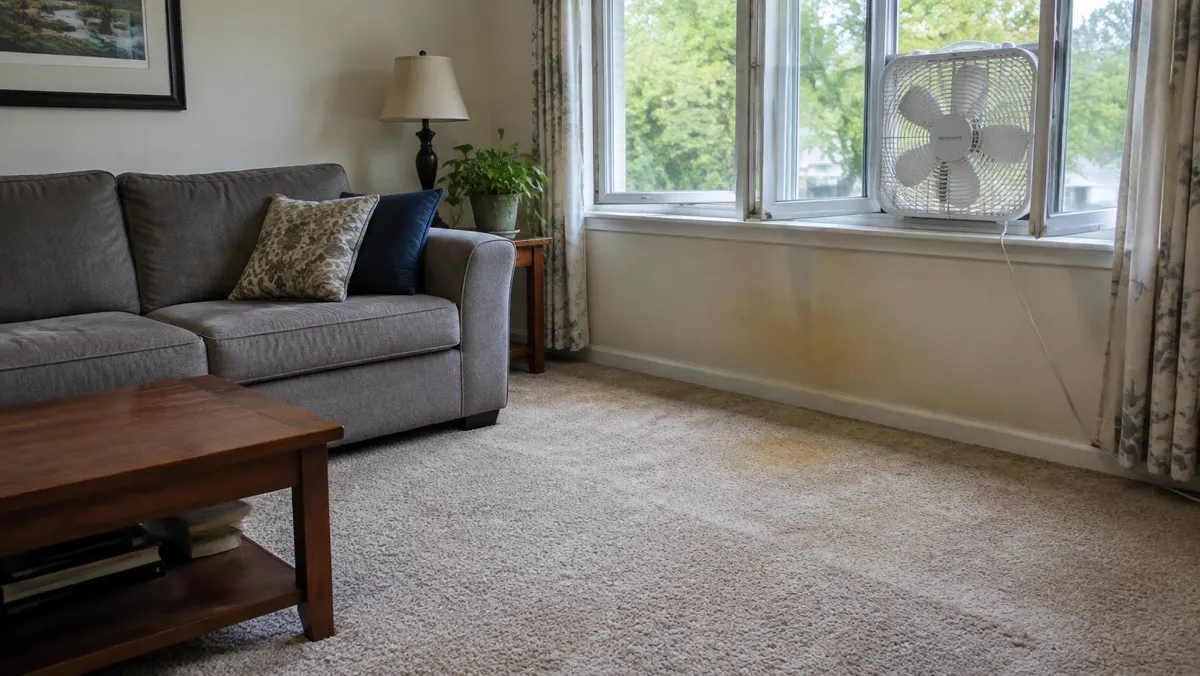
| Airflow | Still air dries slowly | Fans and open windows on dry days |
| Carpet thickness | Dense pile holds more moisture | Thorough extraction |
| Extraction strength | Weak suction leaves more water | Powerful equipment, extra dry passes |
Steam cleaning vs. other methods
Low-moisture and encapsulation methods have uses, especially for maintenance on commercial carpet. Hot-water extraction is generally favored when you want to rinse embedded soil and residue out of residential carpet. Our guide to steam vs. dry carpet cleaning compares them side by side.
Booking steam carpet cleaners in San Diego
SoCal Steam Clean is an IICRC Certified Firm serving San Diego County with truckmount extraction and background-checked technicians. See our carpet cleaning service or start a free quote.