
Step one: make it safe
- 1Stop the source: close the fixture valve or the main shutoff.
- 2Turn off power to wet areas at the panel if you can do so from a dry spot.
- 3Keep children and pets out of wet rooms.
- 4Photograph and video everything before moving items.
Important: Never walk into standing water near outlets, cords or appliances that are still powered.
Step two: judge the water
The source matters more than the amount. Restoration professionals sort water into clean, gray and black categories, and each changes what can be saved.
| Source | Risk | Typical approach |
|---|---|---|
| Supply line, water heater, rain through a window | Lower if addressed fast | Extract and dry; carpet often salvageable |
| Washer overflow, dishwasher, sink drain | Moderate | Clean and sanitize; pad often replaced |
| Toilet overflow with waste, sewage backup, flood water | High | Remove porous materials; professional cleanup |
Step three: what a professional assessment covers
The EPA notes that drying wet materials within 24–48 hours is key to preventing mold growth (EPA mold guide).
- Moisture readings in carpet, pad, subfloor, drywall and baseboards
- Mapping how far water wicked beyond what you can see
- Deciding what can be dried in place and what must come out
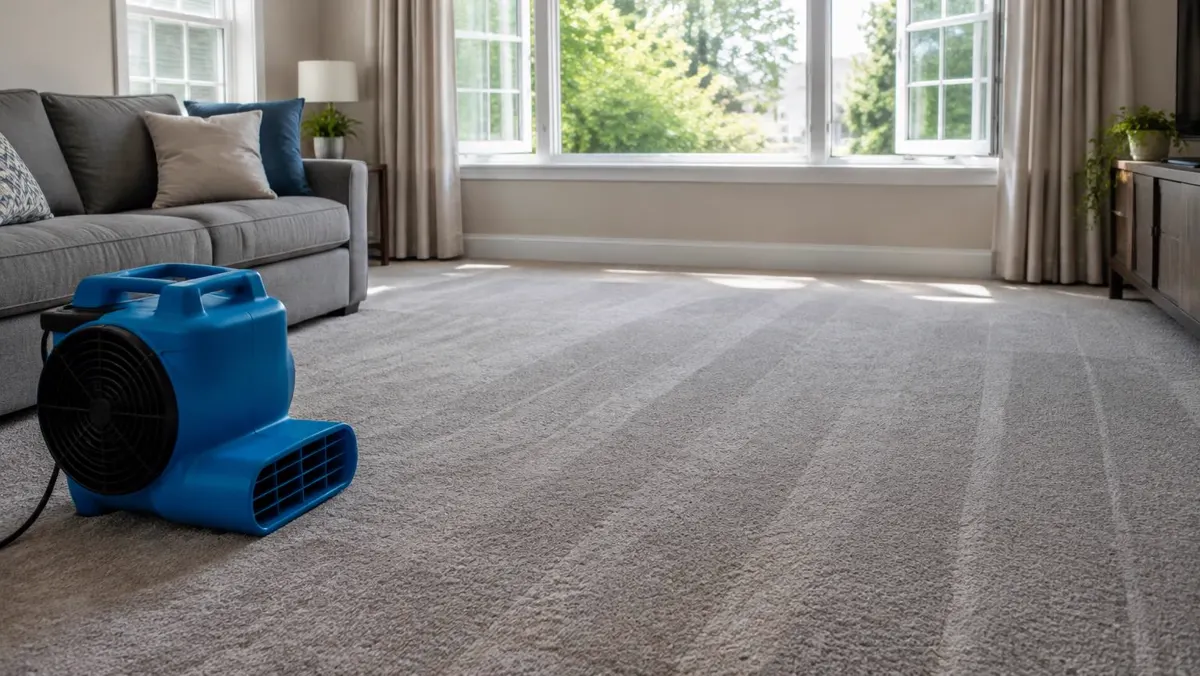
- Setting up air movers and dehumidifiers sized to the space
- Daily readings until materials reach dry standard
Why San Diego homes still get water damage
Dry climate does not prevent leaks. Most losses we hear about come from supply lines, water heaters, slab leaks and appliance failures, plus the occasional winter storm. Coastal humidity can slow drying, while inland Santa Ana days dry rooms faster.
Reducing the headache
- Call your insurer early and keep a log of conversations.
- Keep receipts for anything you buy or any emergency service.
- Do not throw away damaged items before they are documented.
- Ask for moisture readings in writing so you know when drying is complete.
Tip: Know where your main water shutoff is before you need it.
When to call a professional
Call for anything beyond a small, clean spill, for sewage or flood water, or if smells or stains appear days later. See our emergency water damage restoration page, drying tips and the EPA's flood cleanup guidance.