
First steps for any floor
The EPA advises drying water-damaged materials within 24–48 hours to prevent mold growth (EPA).
- 1Stop the water: close the valve or unplug the appliance safely.
- 2Remove standing water with towels or a wet vacuum.
- 3Move rugs, furniture and boxes off the wet area.
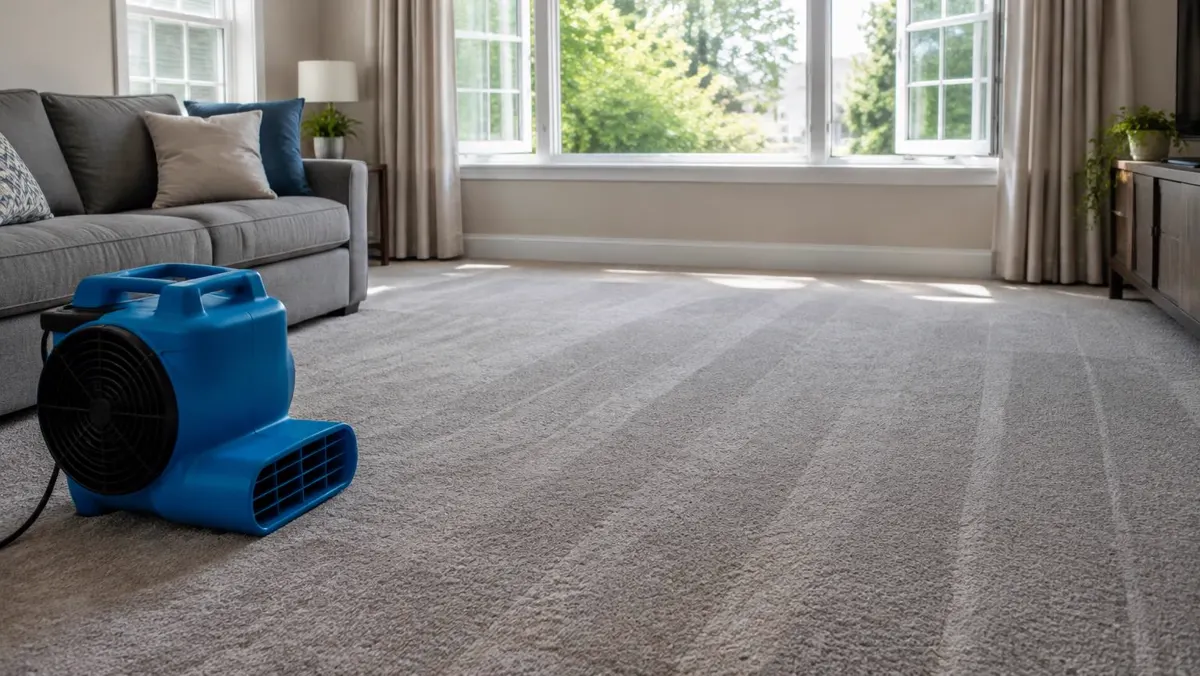
- 4Increase airflow with fans; run a dehumidifier or AC.
- 5Photograph the area for insurance.
By floor type
| Floor | What to do | Warning signs |
|---|---|---|
| Carpet | Blot, extract with wet vac, lift edges if accessible, fans | Musty smell, wet pad, rippling |
| Hardwood | Wipe immediately, fans, dehumidifier | Cupping, crowning, dark stains |
| Laminate | Wipe fast; water at seams is the risk | Swelling at seams, peaking |
| Tile | Dry surface and grout lines | Loose tiles, damp grout, stains on nearby walls |
When “minor” isn't minor
- Water reached under baseboards or into walls.
- The area stays damp after 24 hours.
- Water came from a toilet, sewage or outside flooding.
- Flooring is swelling, lifting or buckling.
- Musty odor appears.
Important: Contaminated water (sewage, toilet overflow with waste, floodwater) is never a DIY minor spill. Porous materials it touches generally should be removed.
Carpet-specific tips
Carpet pad holds far more water than the surface shows. Press a dry paper towel firmly into the carpet; if it comes up wet, the pad is wet. A wet vac pass every few minutes followed by fans works for small areas. If the pad stays wet, professional extraction and drying may be needed.
When to call us
SoCal Steam Clean handles emergency water damage restoration for larger or spreading leaks. See also how to prevent mold after water damage.