
What “low-moisture” actually means
Low-moisture carpet cleaning is an umbrella term for methods that apply far less liquid than a hot-water rinse. The most common variants are encapsulation, bonnet (absorbent pad) cleaning, and dry compound cleaning. None of them is truly “dry” — each uses some moisture to loosen soil — but the carpet is typically damp rather than wet.
The idea is simple: loosen soil near the top of the fibers, trap it in a compound or pad, and remove it by vacuuming or with the pad itself. Because there is less water, there is less drying time.
Low-moisture vs hot-water extraction at a glance
Drying times depend on carpet type, airflow, humidity and how heavily the carpet was soiled, so treat any number as a rough guide rather than a promise.
| Factor | Low-moisture methods | Hot-water extraction |
|---|---|---|
| Water used | Small amount | More water, then extracted |
| Typical dry time | Often 1–2 hours, varies | Often several hours, varies |
| Cleaning depth | Mainly upper pile | Rinses deeper into pile |
| Best fit | Interim maintenance, traffic areas | Periodic deep cleaning, embedded soil |
| Residue risk | Depends on product and vacuuming | Depends on rinse and extraction |
Where low-moisture cleaning makes sense
The Carpet and Rug Institute describes a carpet maintenance approach that combines regular vacuuming, prompt spot removal, interim cleaning and periodic deep cleaning (CRI cleaning and maintenance). Low-moisture methods usually fit the interim slot.
- Offices that need carpet usable the same day between deeper cleanings.
- Light, recent soiling on traffic lanes that hasn't worked deep into the pile.
- Interim appearance maintenance under a planned commercial carpet program.
- Situations where adding water is a concern and deep cleaning can be scheduled later.
Limitations to know before you book
Because low-moisture methods work near the surface, soil that has settled deeper — sand, grit, old spills, pet accidents that reached the backing — may not be removed. Carpet can look cleaner while still holding soil lower down, which is one reason traffic lanes sometimes reappear sooner than expected.
Encapsulation also relies on follow-up vacuuming. If the carpet isn't vacuumed well afterward, crystallized residue stays in the pile.
Important: No method fixes permanent damage. Bleach spots, dye loss, sun fading, burns and crushed or worn fibers are changes to the carpet itself, not soil.
Why we use truck-mounted hot-water extraction
SoCal Steam Clean uses industry-standard truck-mounted hot-water extraction for carpet cleaning. The truck-mount supplies heat and strong vacuum from outside the home, so the cleaning solution is rinsed through the pile and extracted with powerful suction. We use CRI-certified, residue-free products and IICRC-certified technicians.
We mention this so you can compare honestly: if you need a quick interim surface clean, a low-moisture provider may suit. If you want a deeper rinse, see our carpet cleaning service and the steam vs dry cleaning guide.
Helping carpet dry faster after any cleaning
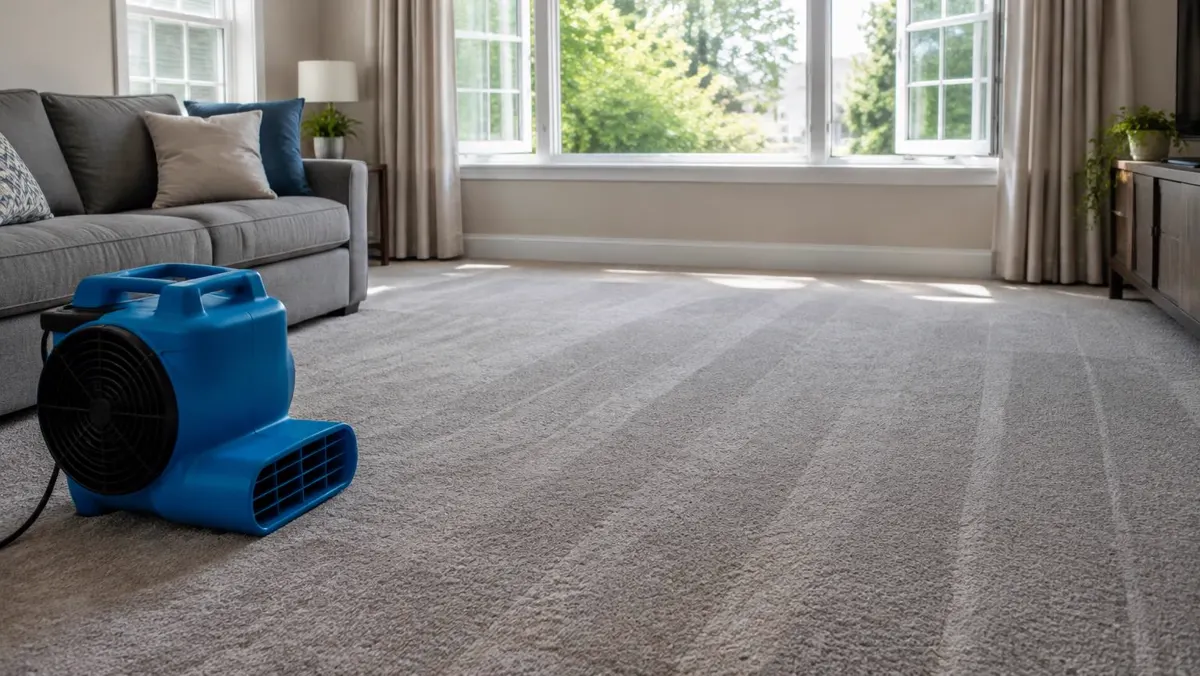
- 1Run fans and air conditioning, or open windows on dry days.
- 2Keep foot traffic off the carpet until it is dry to the touch.
- 3Leave furniture tabs or blocks in place until the carpet is fully dry.
- 4Avoid putting rugs or heavy items back on damp carpet.
Tip: Coastal San Diego humidity can slow drying compared with inland neighborhoods. Airflow is the single biggest factor you control.
Questions to ask any San Diego carpet cleaner
CRI explains its testing programs for cleaning products and equipment on its Seal of Approval page.
- Which method will you use, and why for my carpet?
- How will the solution and loosened soil be removed?
- What drying time should I expect in my home?
- Are your products CRI Seal of Approval certified?
- How do you handle pet urine that reached the padding?