Defining the two approaches
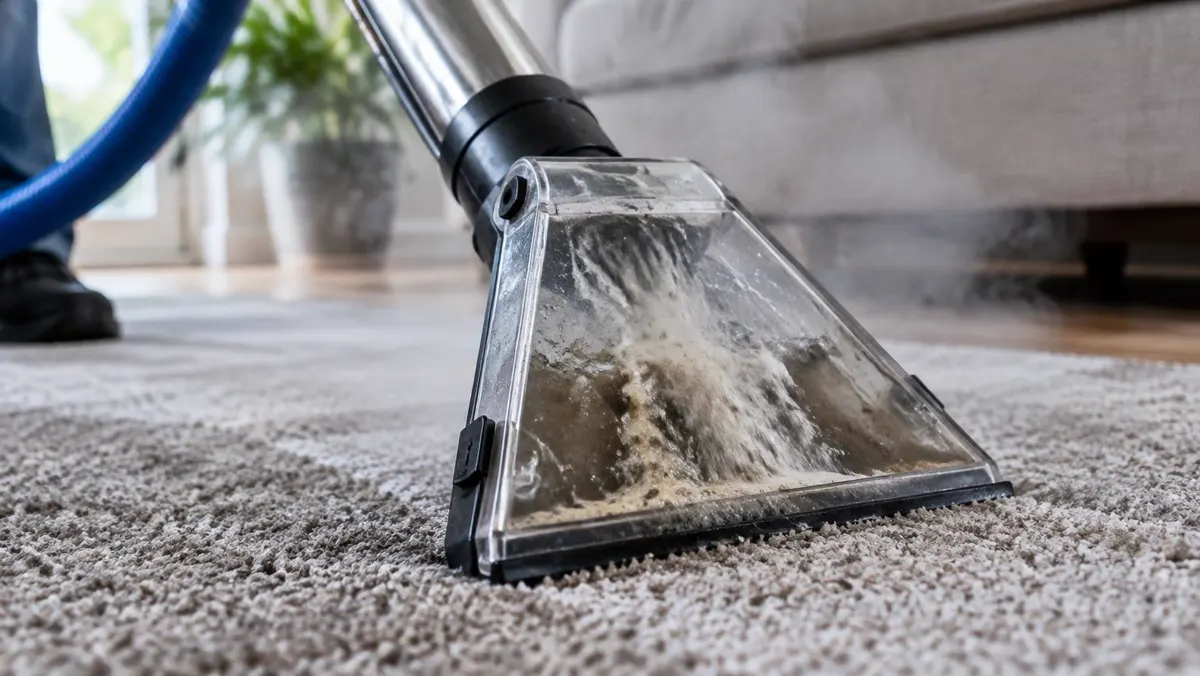
“Steam cleaning” in carpet care means hot-water extraction: heated solution is applied and immediately extracted with strong suction. “Chemical cleaning” usually refers to methods that rely mainly on chemistry with little rinsing — encapsulation, bonnet or dry compound. Both use chemistry; the difference is how much water and rinsing is involved.
For an overview of how these work, see our steam vs chemical cleaning guide. This article focuses on the trade-offs.
Steam cleaning (hot-water extraction)
Chemical-assisted / low-moisture cleaning
Side-by-side comparison
| Factor | Steam (HWE) | Chemical / low-moisture |
|---|---|---|
| Cleaning depth | Deeper | Surface-focused |
| Drying time | Several hours (varies) | Often 1–2 hours (varies) |
| Residue | Rinsed and extracted | Depends on vacuuming |
| Best for | Periodic deep cleaning, heavy soil | Interim maintenance |
| Cost per visit | Often higher | Often lower |
| Cost over time | Fewer re-cleans may be needed | May need more frequent visits |
Decision checklist
- 1Check your carpet warranty — many manufacturers specify hot-water extraction.
- 2Assess soil: light surface soil vs embedded grit, spills or pet issues.
- 3Consider drying needs: can rooms be off-limits for several hours?
- 4Consider fiber: wool and delicate fibers need careful chemistry and temperature.
- 5Plan the long game: combine interim maintenance with periodic deep cleaning.
Tip: Many commercial programs use both: low-moisture for interim appearance and extraction for periodic restoration. See our office carpet cleaning guide.
What we use and why
SoCal Steam Clean uses industry-standard truck-mounted hot-water extraction with CRI-certified, residue-free products. We believe a deep rinse gives the best long-term result for most homes. Read about low-moisture cleaning if you're weighing options, or book carpet cleaning.
The Carpet and Rug Institute provides general maintenance guidance for homeowners (CRI).