
Why pet odors come back
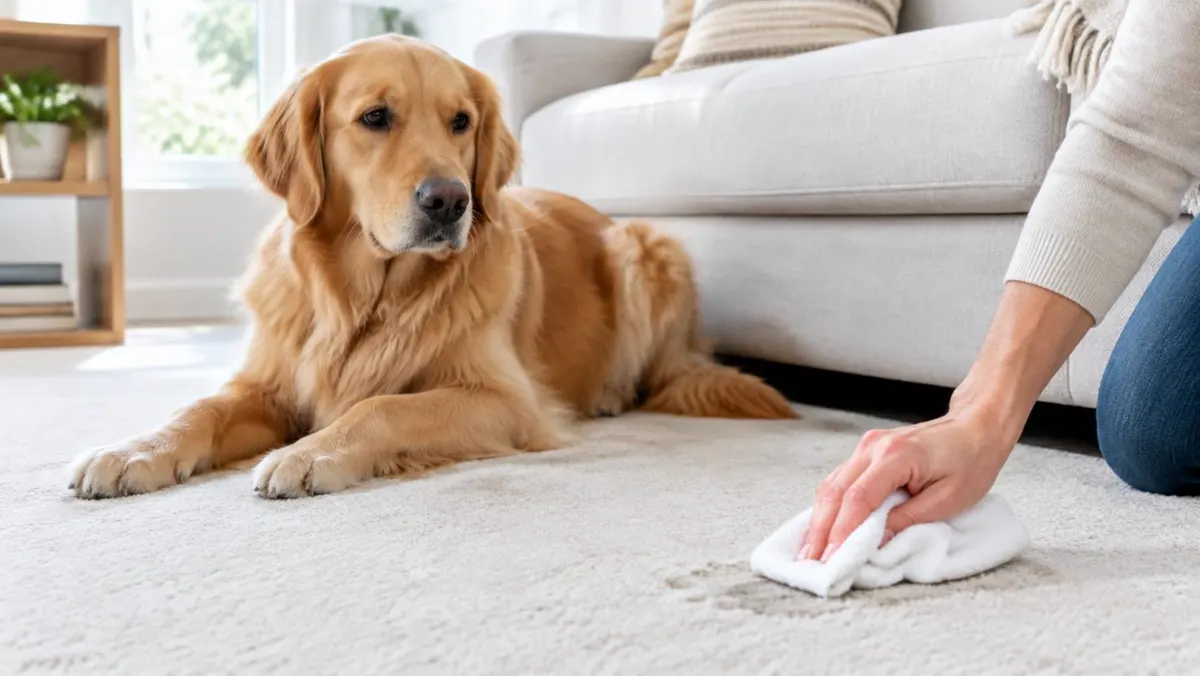
Urine is mostly water, salts and compounds that break down into ammonia-like odors as bacteria act on them. When a pet urinates on carpet, liquid spreads downward and outward — often a wider area in the pad than on the surface. Surface cleaners and fragrances mask the smell for a while; humidity or re-wetting reactivates it.
| Layer | Reached by DIY spotting? | Reached by professional treatment? |
|---|---|---|
| Carpet fibers | Yes | Yes |
| Backing | Sometimes | Usually |
| Pad | Rarely | Sometimes; heavy cases need pad replacement |
| Subfloor | No | Requires sealing or repair |
Step 1: Find every spot
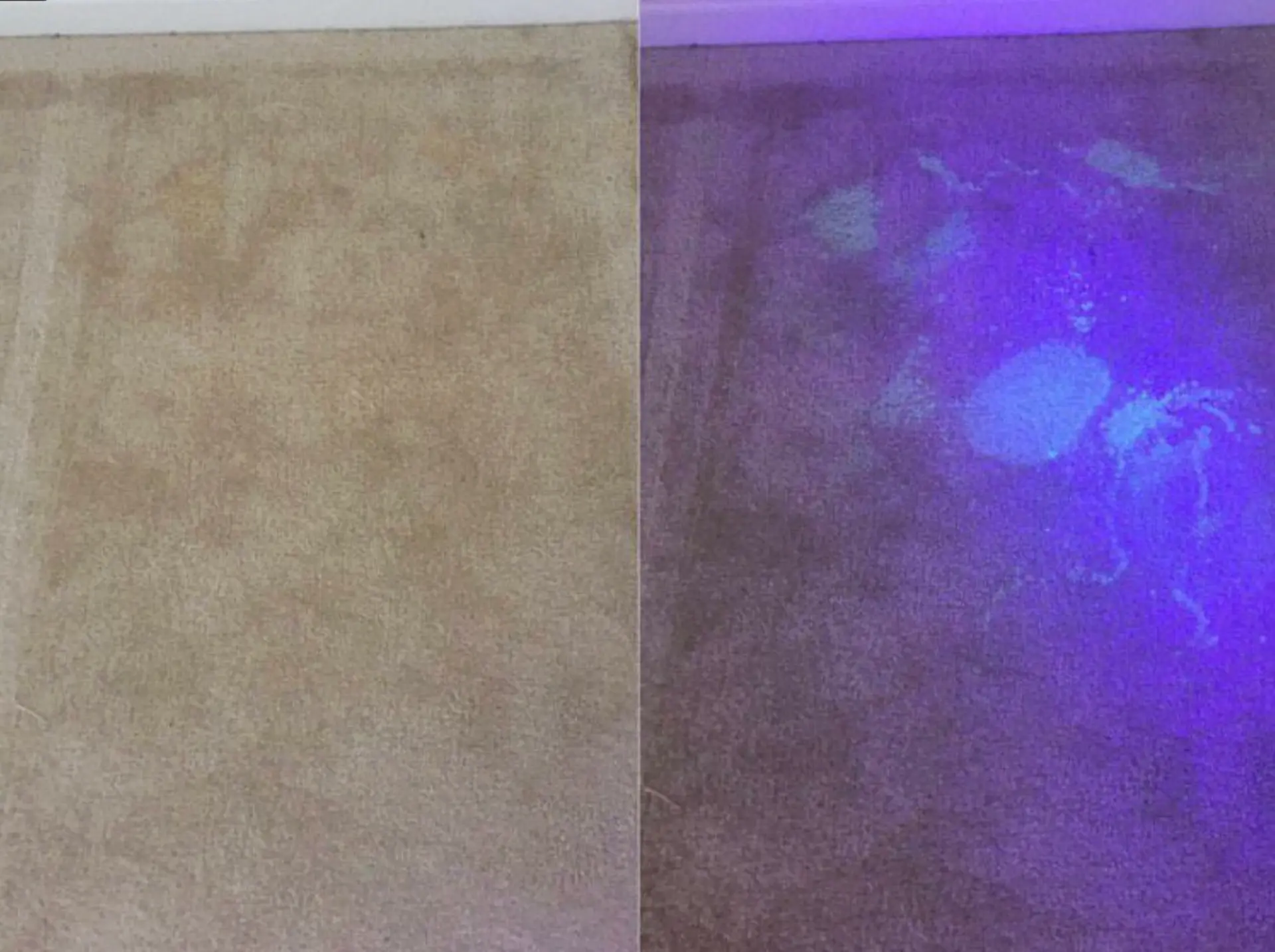
Odors often come from spots you can't see. A UV flashlight in a dark room shows many dried urine spots. Mark them with painter's tape before treating.
Step 2: Treat fresh accidents right away
- 1Blot up as much liquid as possible with paper towels, standing on them to absorb deeper.
- 2Rinse lightly with cool water and blot again.
- 3Apply an enzyme cleaner labeled for pet urine, following directions.
- 4Let it dwell and air dry; don't cover with heat.
Important: Avoid ammonia-based cleaners — they can smell like urine to pets and encourage re-marking. Don't mix cleaning products.
Step 3: Know when DIY isn't enough
- Odor returns after every cleaning.
- Multiple or old spots across a room.
- Spots larger than a dinner plate or repeated in the same area.
- You can smell it from across the room on warm days.
Professional pet treatment
Our pet treatment is an exclusive add-on that targets urine, odor, stain, bacteria, pet hair and dander. It is quoted per room based on severity after assessment. Treatment is matched to how deep contamination goes, then rinsed with truck-mounted hot-water extraction. In heavy cases, replacing the pad section is the only reliable fix, and we'll tell you if that's the case.
Learn more on our odor removal service and pet odor guide.
Preventing repeat accidents
Pets often return to spots that smell like urine. Thorough treatment, consistent house training and vet checks for sudden changes in habits help. The ASPCA has practical house-training guidance.